
Most budget advice is written for months. If you are paid every fortnight, your money moves in a different rhythm. Here is a method that works with your pay, step by step.

Written by Alex BPublished 10 November 2026
Money Detective is built around practical household money tools for Australians.
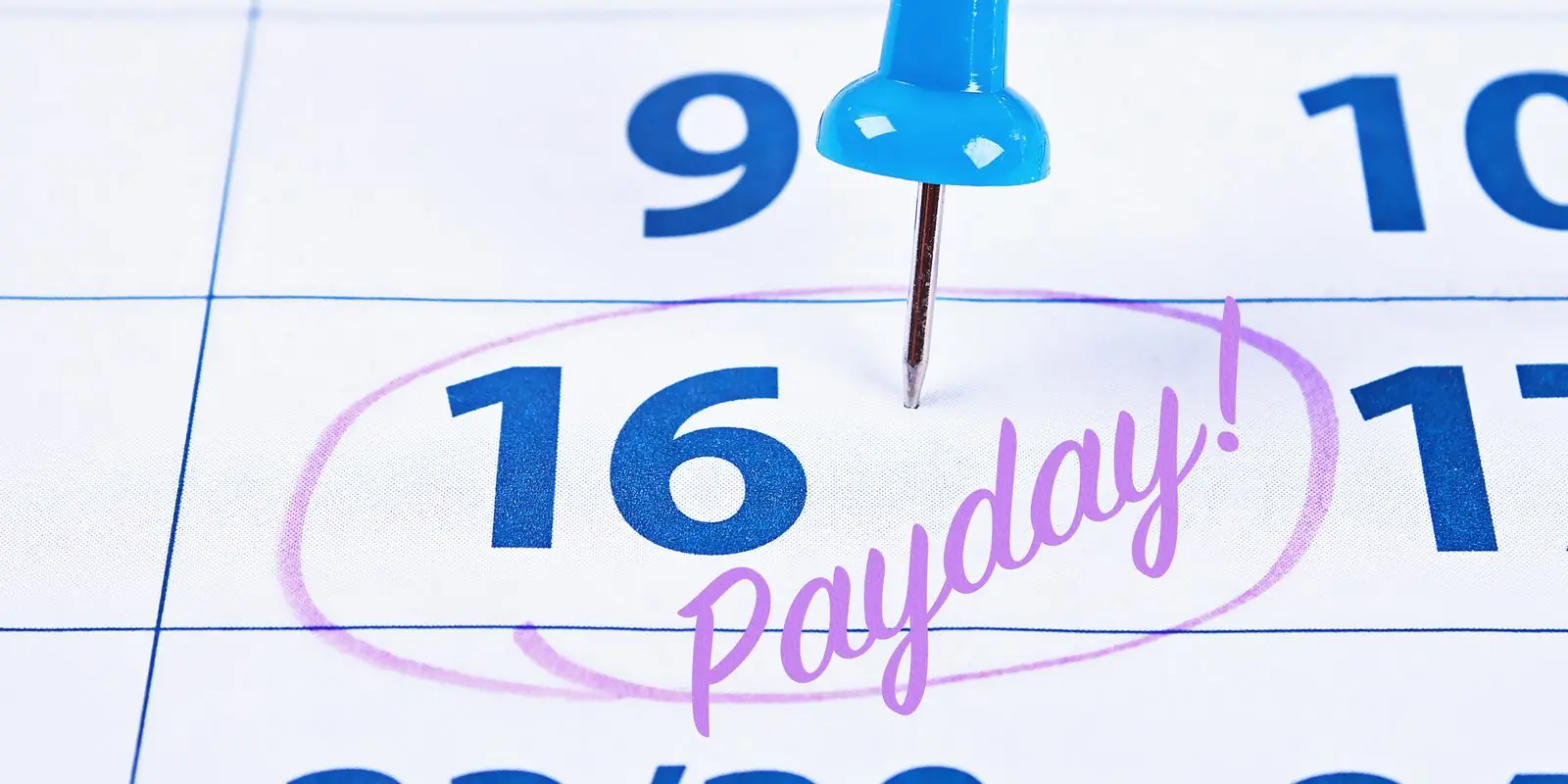
Most budgeting advice talks about a month. But if you are paid every fortnight, your money does not arrive monthly, and a lot of it does not leave monthly either. Rent might go out fortnightly, the electricity comes quarterly, the phone is monthly and the car insurance is once a year. Trying to squeeze all that into one monthly total is why many fortnightly budgets feel like they never quite work.
This guide is the method I would use. It is general information, not personal advice, and every example uses invented figures. If you want the official starting point first, Moneysmart's how to do a budget guide is a good one to read alongside this.
There are 26 fortnights in a year, not 24. That means a monthly bill is really 12 payments spread across 26 pays, and two months a year usually land three paydays in them. If you budget as if every month had two pays, those two extra paydays look like spare money, and they are easy to spend before you notice. Our guide to budgeting fortnightly when your bills are monthly goes deeper on the conversion.
For example, a $65 monthly phone bill is $65 × 12 = $780 a year, and $780 ÷ 26 = $30 for each fortnight. The same sum works for quarterly bills (× 4 ÷ 26) and yearly bills (÷ 26).
Use your take-home pay, the amount that actually lands in your account, not your salary. If you have more than one income, such as a partner's pay or a Centrelink payment, list each one with its own payday. If your pay changes from pay to pay, use a typical lower figure and treat anything above it as a bonus. Our guides to irregular income and budgeting around Centrelink payments cover those cases.
Write down every cost, then give it a fortnightly figure using the formula above. Use the same list each time so nothing slips out. A quick way to catch the forgotten ones is our household bills checklist. Group them in three:
There are two honest ways to do this, and neither is wrong.
Every bill gets a fortnightly figure (like the $30 phone above) and you set that money aside every single pay, even when nothing is due. The upside is that every pay looks the same, which is easy to live with. The downside is you need somewhere to keep the money between pays, such as a separate account or a tracked balance, or it slowly turns into spending money.
Here you look at the next payday and ask which bills fall due before it, then keep that money from this pay. Rent and the phone come from the pay that is just before the due date. This matches how your bank account actually behaves, and it is closer to how Payday Buffer works. The downside is that some pays carry more bills than others, so the money left over changes from pay to pay.
Most households end up using both: Option B for bills that come out of the account on a date, and Option A for big, infrequent costs like rego and insurance (see our sinking funds guide).
Take your pay and subtract what the pay must cover. What remains is an estimate of what you can spend on everything else, without touching the money that is already spoken for. We call this a safe to spend figure. It is an estimate based on the numbers you enter, not a promise, and it only knows about the bills you put in. There is a plain definition in what is safe to spend.
This household takes home $2,600 each fortnight. The figures are made up to show the method, not typical costs.
| Cost | How it is paid | Per fortnight |
|---|---|---|
| Rent | $1,100 each fortnight | $1,100.00 |
| Electricity | $420 a quarter | $64.62 |
| Phone | $65 a month | $30.00 |
| Internet | $80 a month | $36.92 |
| Car insurance | $1,320 a year | $50.77 |
| Car rego | $860 a year | $33.08 |
| Streaming and apps | $32 a month | $14.77 |
| Groceries (estimate) | One pay's worth | $450.00 |
| Fuel (estimate) | One pay's worth | $120.00 |
| Total the pay must cover | $1,900.16 | |
| Left from $2,600.00 | $699.84 |
So $699.84 is an estimate of what is left for everything else in this fortnight: takeaway, clothes, gifts, savings, the dentist. If this household also wants to put $100 into savings, it comes off that number before they think of it as spending money.
Notice what the example does: the quarterly, monthly and yearly bills have all been turned into a fortnightly amount, so none of them can ambush the pay when they fall due. That is the whole trick.
A budget is only a guess until you compare it with real life. Halfway through the pay, take two minutes: Is the money for what is due still where you expect it? Are groceries on track? If something has gone over, shrink the next thing you can control, not everything at once. If you keep running short, our guide to running out of money before payday walks through what to check.
The method is the same for every pay cycle. What changes is how many pays a year you have to divide each bill by. A monthly bill is charged 12 times a year, so what it costs per pay depends on how many pays share that year:
| Pay cycle | Pays a year | $100 monthly bill costs per pay |
|---|---|---|
| Weekly | 52 | $23.08 |
| Fortnightly | 26 | $46.15 |
| Every 4 weeks | 13 | $92.31 |
| Monthly | 12 | $100.00 |
$100 × 12 ÷ pays a year, rounded to the cent. Dividing a monthly bill by 2 for a fortnightly pay gives $50.00, which is $3.85 too much each pay for this bill and means you over-save for it, while dividing by 4 for a weekly pay gives $25.00, which is $1.92 a pay too much.
If you are paid every four weeks, you have 13 pays a year, not 12, which means one pay a year lands in a month that already had one. That is the same effect as the three-payday months below, only it happens once a year instead of twice.
A fortnightly cycle has 26 pays, but there are 12 months, so most months have two paydays and two months a year have three. The extra pay is easy to treat as a bonus. It is better used on purpose: pay down the costs that do not come monthly, top up a sinking fund or build a buffer. The calculator above lists your extra-payday months from the next payday you enter.
Some years also have 27 fortnightly paydays rather than 26, because 365 days is slightly more than 26 fortnights (364 days). If your first payday of the year falls on 1 January, your last one falls on 31 December and you get a 27th pay. A budget that divides by 26 will then finish the year with one pay of surplus. This is a good surprise to plan for rather than spend.
The method works on paper, in a spreadsheet or in your head once you have done it twice. The goal is the same each time: each pay covers what it has to cover, and nothing important depends on the next one arriving early.
Convert each monthly bill to a per-pay figure by multiplying by 12 and dividing by 26. Then either set that amount aside from every pay (spread evenly) or pay each bill from the pay that falls just before it is due. The conversion calculator above does the sums.
No. A fortnight is 14 days, and a month is 30 or 31 days (or 28 or 29 in February), so a month is slightly more than two fortnights. Over a year, 26 fortnights cover 364 days, and 12 months cover 365 or 366.
Treat it as planned. A common approach is to use the extra pay for costs that do not recur monthly, to top up an emergency fund or a sinking fund, or to put towards debt. Whatever you choose, decide before the pay lands.
Yes, with a change: budget on a low baseline rather than your average (see budgeting on irregular income).
Spreading evenly is easier to follow and keeps every pay the same. Paying from the pay before is closer to how the money actually moves but makes pays uneven. Many people choose even spreading for regular bills and the pay-before method for a couple of large ones.
You can do all of this on paper. A spreadsheet just does the converting and adding for you and keeps it from one pay to the next. The Money Detective spreadsheets are all Excel workbooks that you fill in yourself.
Not sure which one? See budget templates Australia for the full list.
This article provides general information only. It does not take into account your personal objectives, financial situation or needs, and it is not financial advice. Examples use invented figures. Money Detective's tools provide estimates and planning information. Consider your own circumstances, and seek independent advice if you need it, before making financial decisions.