
What you do in the hour after you are paid matters more than any budget you wrote last month. Here is a simple payday routine, in a sensible order, for any pay cycle.

Written by Alex BPublished 10 November 2026
Money Detective is built around practical household money tools for Australians.
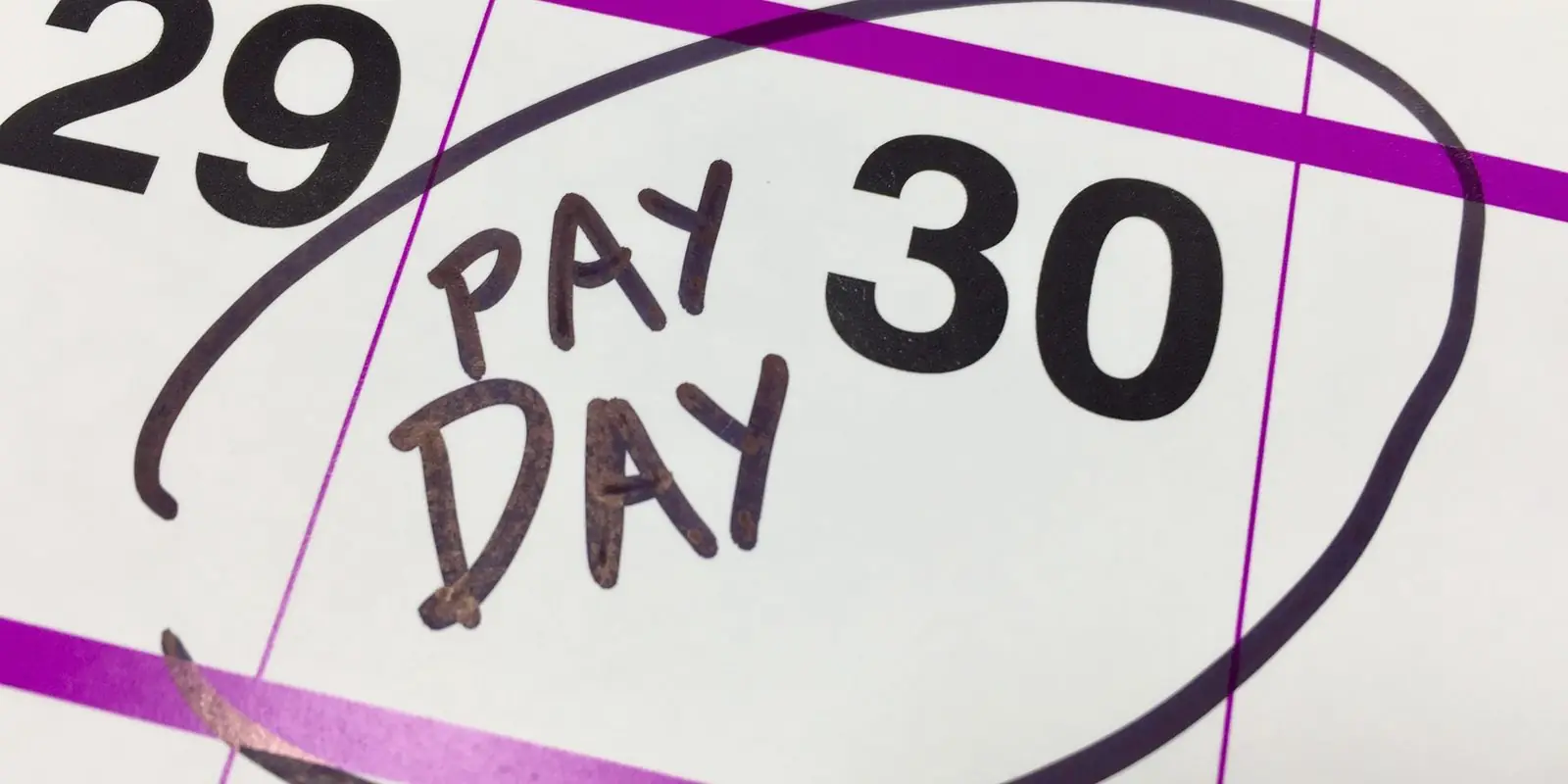
Payday is the one moment in the pay cycle when you have the most information and the most options. The money has landed, the bills are all still ahead of you, and nothing has been spent. A payday budget is simply what you do with that moment on purpose, instead of letting the balance look bigger than it is.
This is a routine rather than a full budget. It takes about 20 minutes the first time and less after that. It is general information, not personal advice.
Look at the amount that landed. If it is less than usual (unpaid hours, tax changes, a missing allowance), adjust the plan now rather than later.
Open your banking app or statement and list every bill and direct debit due before your next pay. Add any card or buy now pay later instalments. Include the ones that are not monthly, like a quarterly power bill or an annual subscription renewing next week.
Whatever is due before next payday, put that money somewhere it will not be spent by mistake. That can be a separate account, or a figure you write down and subtract from the balance. This is the single habit that stops bill money from being spent as if it were spare. Our guide on budgeting fortnightly covers how to match bills to the pay before they fall due.
Rego, insurance, school costs, Christmas, car servicing. For each one, divide what is still needed by the paydays left until it is due, and put that amount aside from this pay. If you do this every pay, the bill is already paid by the time it arrives.
Estimate groceries, fuel and the other basics for one pay cycle. A rough figure based on your last couple of pays is fine to start with.
What remains is an estimate of what you can spend on everything else until the next payday. We call this Safe to Spend (see what is safe to spend). Split it by the number of days to payday if that helps you pace it.
If you want to put something towards an emergency fund or a goal, take it off at this point, before you decide what is left to spend. A small regular amount is easier to keep up than a large one you drop after two pays.
The order is the same. The difference is how long each pay has to last.
If savings are whatever is left at the end of the pay, they are usually nothing. Putting the savings amount aside on payday, before spending starts, is a more reliable habit. If there is nothing to put aside yet, that is information too: it may mean a cost is missing from your list, or that the budget needs a hard look. Our guide on a worked pay cycle shows the order in numbers.
Put the checklist somewhere you will see it on payday, such as a note on your phone, a sticky note or the first tab of a spreadsheet. The fewer steps you have to remember, the more likely you are to do it.
Some employers pay early when payday falls on a weekend or public holiday, and some pay on the next business day. For government payments, Services Australia says reporting and payment dates can change around holiday closures, so check your online account. In both cases, do not assume the date: check the day the money actually lands, and look at what is due in between. Direct debits do not necessarily move with it.
| Step | Amount | Left |
|---|---|---|
| Pay lands | $2,600.00 | $2,600.00 |
| Rent | −$1,100.00 | $1,500.00 |
| Phone, internet and subscriptions | −$145.00 | $1,355.00 |
| Car insurance direct debit | −$96.00 | $1,259.00 |
| Set aside: rego $860 over 8 pays | −$107.50 | $1,151.50 |
| Set aside: Christmas $600 over 6 pays | −$100.00 | $1,051.50 |
| Groceries and fuel | −$610.00 | $441.50 |
| Emergency fund | −$60.00 | $381.50 |
That leaves $381.50 to spend over 14 days, or about $27.25 a day. Nothing in the order is magic. The point is that everything with a job is taken off first, so the remaining figure is a realistic number, not the balance in the account.
A plan for each pay, made on the day it arrives, that lists what the pay has to cover before the next one and what is left to spend. Unlike a monthly budget, it follows the way your money actually comes in.
Convert each bill to a per-pay amount (monthly × 12 ÷ pays a year) or pay each one from the pay before it is due. See how to budget fortnightly for both methods.
The first time, about 20 minutes. After that, 5 to 10 minutes, mostly checking what is due before the next pay.
If you do the routine and the numbers do not work, that is a real result, not a failing on your part. Before you borrow to cover the gap, talk to the people you owe or call the National Debt Helpline on 1800 007 007 (Monday to Friday, 9:30am to 4:30pm). It is free, and Moneysmart explains how asking for hardship help works.
This article provides general information only. It does not take into account your personal objectives, financial situation or needs, and it is not financial advice. Examples use invented figures. Money Detective's tools provide estimates and planning information. Consider your own circumstances, and seek independent advice if you need it, before making financial decisions.