
How bill smoothing works in Australia, what happens when your retailer reviews it, and a free checker to see whether your smoothing payment is on track.

Written by Alex BFounder of Money Detective. Published 27 November 2026.
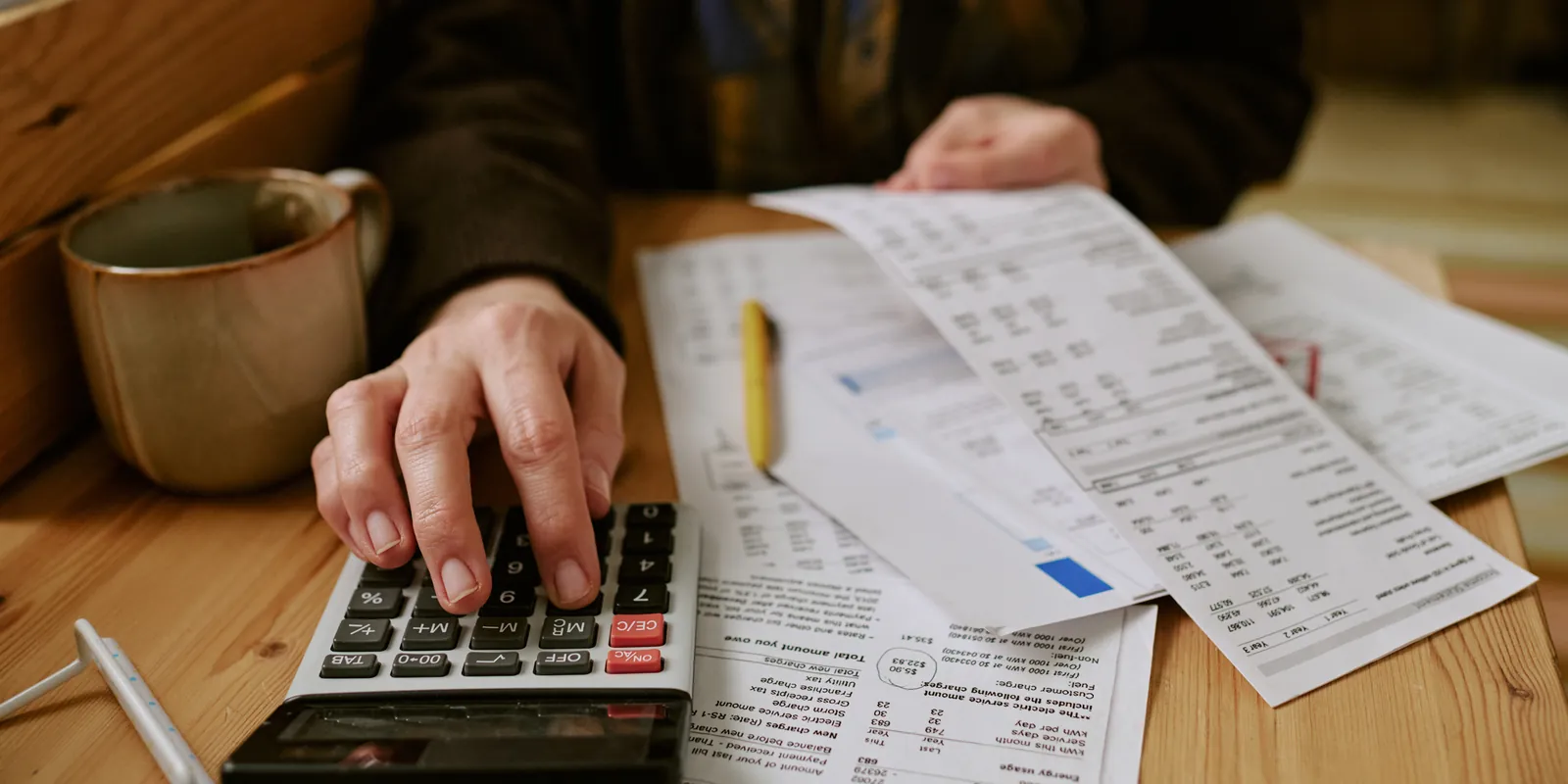
A $520 winter power bill is hard to swallow when it lands in the same fortnight as rego. Bill smoothing is the fix many energy retailers offer: instead of four lumpy quarterly bills, you pay the same amount every week, fortnight or month.
Bill smoothing is genuinely useful, but it runs on an estimate, and estimates drift. This guide explains how it works, where the catch is, and how to check your payment before a review surprises you. If you'd rather plan every bill per pay yourself, Payday Buffer does that for rego, insurance and the rest too, not just power.
Bill smoothing is a payment plan where your energy retailer estimates what your power or gas will cost over the next year, then splits that into equal payments. Most retailers let you choose weekly, fortnightly or monthly (depending on the provider), and the payment usually comes out by direct debit.
So if your retailer expects your electricity to cost $1,560 over the year and you pay fortnightly, your smoothing payment is $1,560 ÷ 26 = $60 a fortnight. Weekly it would be $30, and monthly $130.
You still get your normal bills showing your usage and account balance. The difference is that the amount owing is already being paid off in small pieces, so your account runs slightly ahead in the cheap seasons and slightly behind in the expensive ones.
It isn't only for energy. Moneysmart notes that some other services, like phone, offer bill smoothing too. Ask each provider what they offer.
Most retailers base the estimate on your last 12 months of usage. If you've just moved in, they use an average for a similar home, which is less reliable. They may also factor in known price changes.
Because it's an estimate, retailers review it during the year, often around the six-month mark, by comparing what you've actually used with what they predicted. If you're paying too little, they'll usually write to you with a new, higher amount. If you're paying too much, your account builds up a credit.
Bill smoothing doesn't change what you pay over a year. It only changes when you pay. At the end of each yearly cycle, your payments are compared with your actual bills, and one of two things happens:
The usual reasons a smoothing payment falls short:
Already behind on your power bill? Some retailers only offer bill smoothing to customers who are up to date. If you're struggling to pay, ask your retailer about their hardship program or a payment plan instead. Our guide to what to do if you can't pay your bills covers your options, and the free National Debt Helpline is on 1800 007 007.
Enter your last four quarterly bills (or one yearly total), your current smoothing payment and any expected price change. You'll see whether you're likely to end the year in credit or owing money, and what payment would cover it.
How this works: add your bills for the year, adjust for any price change, then compare with your payment × payments per year. It's an estimate based on your past bills, not your retailer's calculation. Your figures stay in your browser.
These figures are invented for illustration. A household's last four quarterly power bills were $520 (winter), $310, $280 and $450 (summer), so $1,560 for the year. Their retailer set a smoothing payment of $60 a fortnight, which covers exactly $1,560 a year.
Then prices went up 5%. The same usage now costs about $1,638 a year.
| Per year | Per fortnight | |
|---|---|---|
| Current smoothing payment | $1,560 | $60.00 |
| Expected cost after a 5% rise | $1,638 | $63.00 |
| Likely shortfall at the end of the year | $78 | $3.00 |
In this example, asking the retailer to lift the payment to $63 a fortnight avoids a $78 catch-up bill at the end of the year. A small change early is easier than a lump sum after Christmas.
You can get the same smooth result without a smoothing plan by moving a set amount into a separate bills account every payday, then paying the quarterly bill from there when it arrives.
| Retailer bill smoothing | Doing it yourself | |
|---|---|---|
| Who holds the money | Your retailer, as credit on your account | You, in your own bills account |
| Which bills it covers | That one energy account | Any bill: power, gas, water, rego, insurance |
| Effort | Set and forget, apart from reviews | A payday transfer and an occasional check |
| If you move or switch retailer | Plan ends and the account is settled | Your savings move with you |
| Main risk | A catch-up payment after a review | Dipping into the bills account |
Many households use both: bill smoothing for power, and a payday transfer for everything else. To work out a single amount for all your bills, use the calculator in our guide to how to organise bills. For bigger yearly costs like rego and insurance, sinking funds work the same way. If you get a Centrelink payment, Centrepay is another way to pay some bills in small amounts straight from your payment.
To cancel, contact your retailer before your next payment is due. Any amount owing usually needs to be paid when the plan ends.
Smoothing your power is one bill. Payday Buffer plans the rest of them around your pay.
See Payday Buffer Free Payday CheckPayday Buffer ($29.95, one-off) is an Excel workbook that plans each pay around your real pay cycle. It puts bills first, spreads costs like rego and insurance into an amount per pay, and warns you when a pay falls short. Bill smoothing takes care of power. Payday Buffer helps with everything else that needs to come out of the same pay. It's a Microsoft Excel (.xlsx) file for Mac or Windows. No bank login and no subscription.
If big seasonal bills throw your budget out, it can make things much easier to plan. It doesn't lower your costs, so it's worth checking your plan is a good one as well.
Check your retailer's terms. The smoothing payments themselves go towards your bill, but you may be charged if a direct debit fails.
Some retailers require your account to be up to date first. If you're behind, ask about their hardship program or a payment plan instead.
Some water providers and councils let you pay in smaller regular amounts. Ask them, or set money aside each payday yourself.
This article provides general information only. It does not take into account your personal objectives, financial situation or needs, and it is not financial advice. Example figures are invented for illustration and don't reflect any particular household or retailer. Each retailer's bill smoothing terms differ, so check yours. Figures checked 27 November 2026.